

Time to reconsider tariff policy - and join it up with industrial and banking policy
Tariffs are not stupid, as Trump-opponents claim. But they have to be deployed as part of a high growth and development strategy to work

Vienna, 28 February 2026. A week ago, on 20 February, the U.S. Supreme Court struck down US President Donald Trump’s trade tariffs that he had imposed on many countries across the globe as the pillar of his international and national economic policies, which had merged into his main foreign policy tool. Trump had relied on a law meant for use in national emergencies, and the Supreme Court had upheld an earlier lower court’s decision that the 1977 International Emergency Economic Powers Act (IEEPA) did not grant Trump the powers he sought to impose the tariffs.
All else unchanged, it is bad news for the US nation to do without the tariff revenue that the Trump administration had expected to count in the billions: As of 28 February 2026, national debt had reached US$ 38.7 trillion, and is likely to hit 40 trillion before the end of the first quarter 2026.
The 6-3 decision, signed by conservative Chief Justice John Roberts, provoked a furious reaction from Trump, who said he was ashamed of certain members of the court who were “not having the courage to do what’s right for our country”.
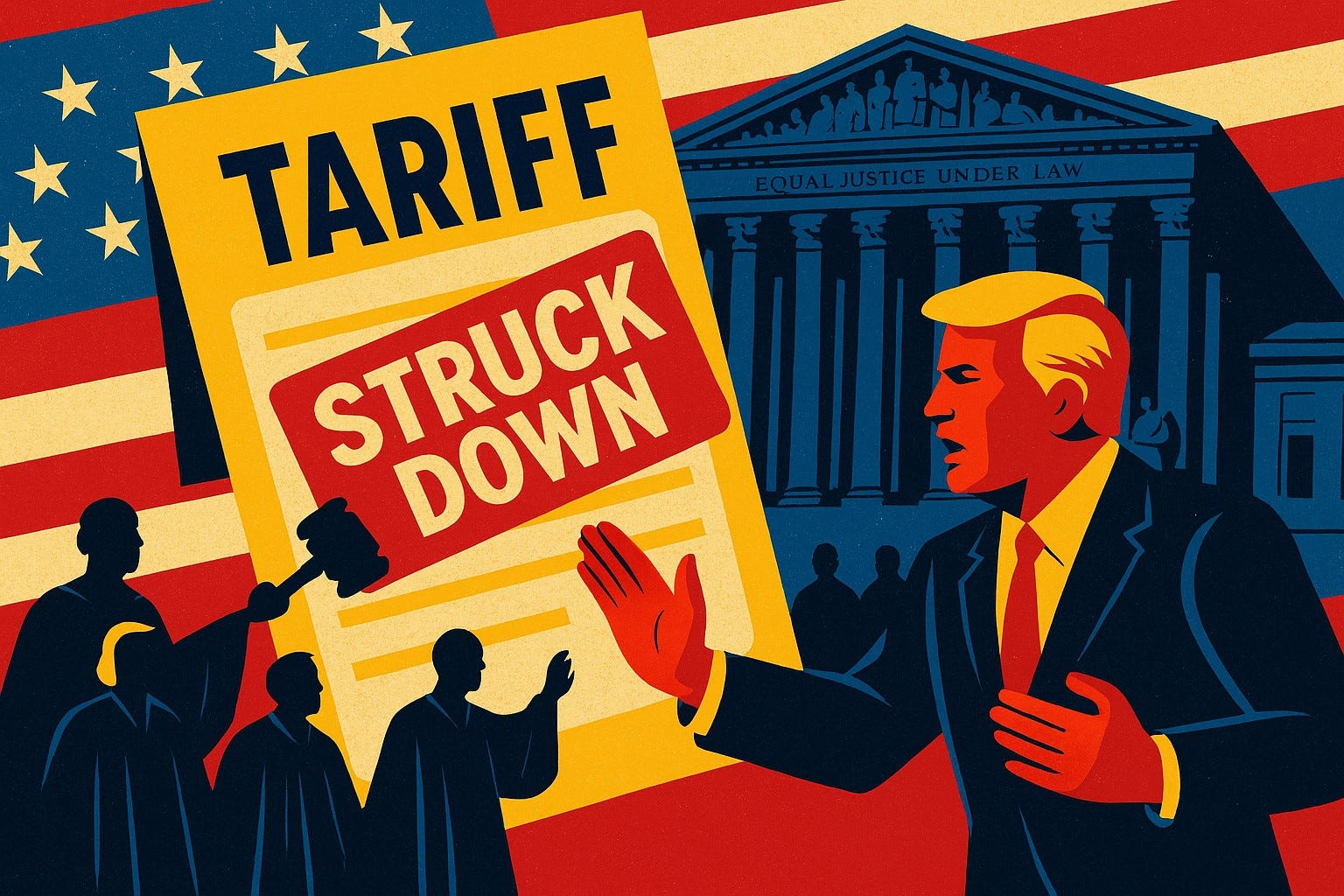
Trump said “other alternatives” are available to him to pursue tariffs, and announced a 10% global tariff under a legal authority different from the one at issue in the case “over and above our normal tariffs already being charged.”
“Our task today is to decide only whether the power to “regulate ... importation,” as granted to the president in IEEPA, embraces the power to impose tariffs. It does not,” said Justice Roberts in the ruling.
The U.S. Constitution grants Congress, not the president, the authority to issue taxes and tariffs.
The main alternative available to Trump is to invoke national security, as well as anti-terrorism and anti-money laundering legislation, while accusing other countries of criminal actions – as was done to Venezuela.
As expected, it wasn’t long before Treasury Secretary Scott Bessent and other administration officials announced that the U.S. would rely on different legal grounds to keep most of Trump’s tariffs in place. One of these is a law that allows tariffs on imports considered a threat to national security. Another provision permits retaliation against trading partners that the U.S. Trade Representative finds have engaged in unfair trade practices against American businesses.
A good time to reconsider the Trump Tariff Tactic
Before rushing into dramatic alternative legal justifications, the Trump administration and its senior economic policy leaders, including the new Chair of the Council of Economic Advisers, Pierre Yared, might wish to re-think the blanket tariff strategy adopted so far.
While tariffs can be very useful, there is something about them that had not been considered by the Trump Administration, and this is a good time to reflect it. I’ll explain.

Acting Chairman of the Council of Economic Advisers, Pierre Yared
No nation has achieved rapid, sustained, stable and inclusive growth without aligning its trade policy with a coherent industrial policy – and both, in turn, with a supportive banking and monetary framework. Tariffs can be powerful policy tools. But uncoordinated with domestic credit creation and industrial strategy they provide protection without production – form without substance. It’s a missed opportunity and rather like building factory walls without putting machinery inside.
