

Comment: Snap Election in Japan to Heighten Tension in Asia and Further Empower the Princes at the Central Bank
Today, Sunday, 8 February 2026, a snap general election is held in Japan, called by Ms Sanae Takaichi, to boost her majority by transforming her popularity with young voters into seats in the Diet.

Tokyo, 8 February 2026. Japan’s conservative PM Sanae Takaichi, 64, is set for an election victory after she called for a snap election to be held this Sunday 8 February 2026. Snap elections are called when the ruling party feels ahead and wants to lock in popularity, while not giving opposition parties sufficient time to form a strong campaign on alternative policy options. The warning period was a very brief 16 days only.
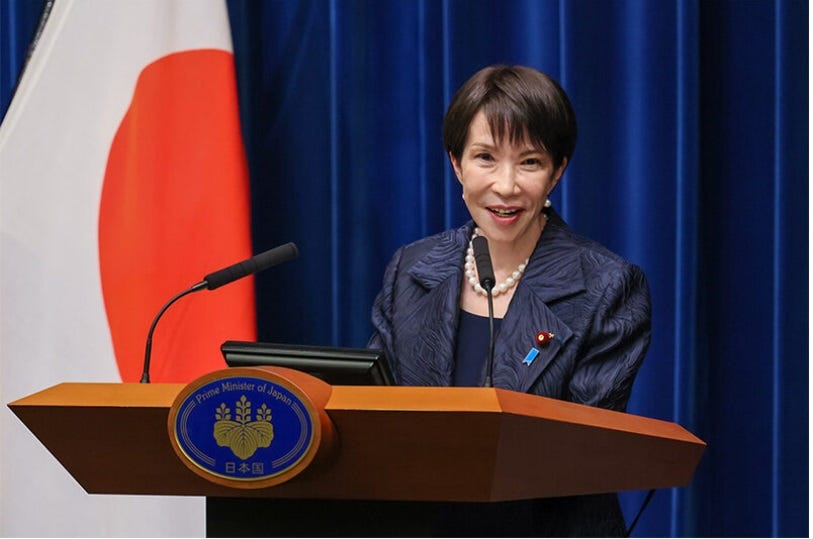
Takaichi became Japan’s Prime Minister only late last year, as the first female Japanese head of government in modern history. She won a majority in internal voting by the long ruling Liberal Democratic Party (LDP), partly due longest serving post-war prime minister, Shinzo Abe, having been her mentor. She also was adept at forging a coalition agreement with the Japan Innovation Party, and thus on 21 October 2025 she was appointed Prime Minister. So Sanae Takaichi had not yet faced a public vote.
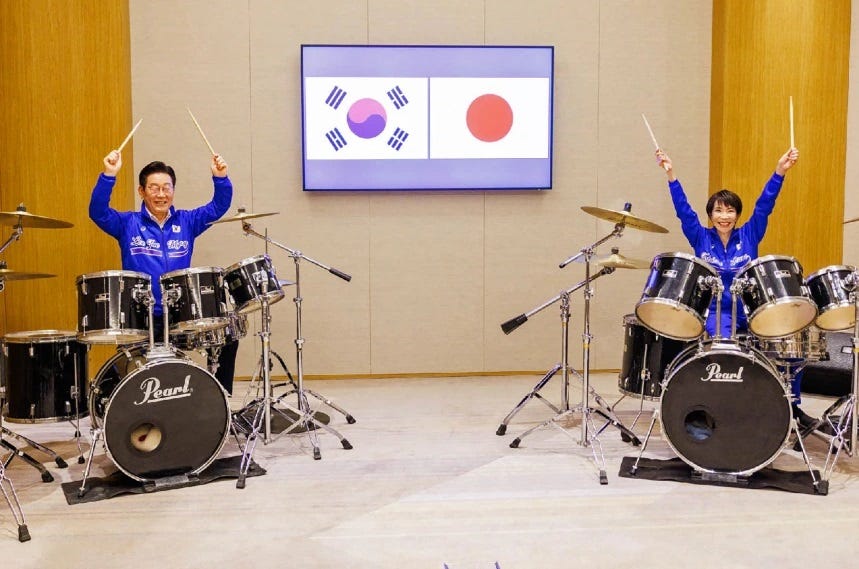
However, PM Takaichi has been adept at marketing herself in this brief time, including on social media, playing on the novelty value of a female prime minister. She appears with media stars, well-known sports people and even played the drums together with the president of Korea, who, like her, is able to work the percussion for a band. Takaichi has succeeded in building up something akin to a personality cult in this short time. Her handbag has sold out at the Japanese manufacturer and there is a 9-month order backlog. She has accumulated 2.6 million followers on X, compared to barely more than 60,000 for her political opponent. Her popularity with young voters was clearly a key plank of her calculation to dissolve parliament, announced only on 22 January 2026, and jump this election onto the political landscape.
Not from an insider family
One thing in her favour is that, unlike many Japanese politicians, she did not inherit her seat in parliament (the Diet, in Kasumigaseki, Tokyo). She is a self-starter who worked during university years to pay for her own education, as her parents, from humble background, did not have the funds.
One has to be aware of the incestuous nature of Japanese politics in order to appreciate the phenomenon that is Ms Takaichi. Here is a table only of postwar Japanese prime ministers who are related to each other:
